Pubblicato da
mariacarmelafratearchitetto
ENGLISH - Born in Italy 25/04/1959, architect, gained a Master Degree in Napoli, in 1985, and PhD in 2017 c/o the University Federico II. Her activity is chiefly focused on planning and managing architectural heritage (also with historical value) recovery. She planned, coordinated and directed Post-lauream Courses – for architects and engineers – about bioclimatic and energy issues in restoration, also as teacher.
The most relevant are:
• 2014 - Course “Restoration and recovery of existing buildings” cod. UM 12.02.4I.068, Perugia, Project, Scientific Supervision, Teaching;
• 2013/14 - Course Energy and Environmental Recovery of existing buildings cod. UM 12.02.2E.012, Perugia, Project, Scientific Supervision, Teaching;
• 2010 – Training post-lauream Course EGEA – Expert in energy and environmental management, cod. SIRU PG 09022E029 cod CUP J65C09000020007, Teaching;
• 2009 - Training post-lauream Course – Expert in environmental, social and economic planning of historical centres, cod. SIRU PG 08021°243 cod CUP J95C08001650007 , Perugia, Project, Scientific Supervision, Teaching;
• 2007 - Training post-lauream Course – Expert in bioclimatic planning, cod. PG.06.03.33.029, Marsciano, Project, Scientific Supervision, Teaching;
She performed didactic work at the workshop of History of Architecture and Urban Planning, c/o the University of Perugia.
She took part in the GTS (Scientific Technical Group) in order to define guidelines for planning the historical centre of Nocera Umbra, following the earthquake in 1997; she was also member of Consulting Committes for Territory.
She is currently member of the board of Centro Studi Mastrodicasa, engaged in restoration and consolidation. She held several conferences on these topics.
In 2005 she achieved a Master in “Management and communication”, Willingen (Germania), STAR’S EDGE INTERNATIONAL, Florida
She published a book about executive guidelines in recovery and restoration:
2009 - Capitolato speciale di appalto per lavori di recupero conservazione restauro, Dario Flaccovio editore, Palermo 2009, ISBN 978-88-7758-865-4
She edited two publications about recovery and restoration:
2010 - Il restauro del patrimonio storico (a cura di), Dario Flaccovio editore, Palermo 2010 ISBN 978-88-579-0040-7
2012 - Restauro Conservativo e tutela ambientale (a cura di), con Flavia Trivella, Dario Flaccovio editore, Palermo 2012, ISBN 978-88-579-0114-5
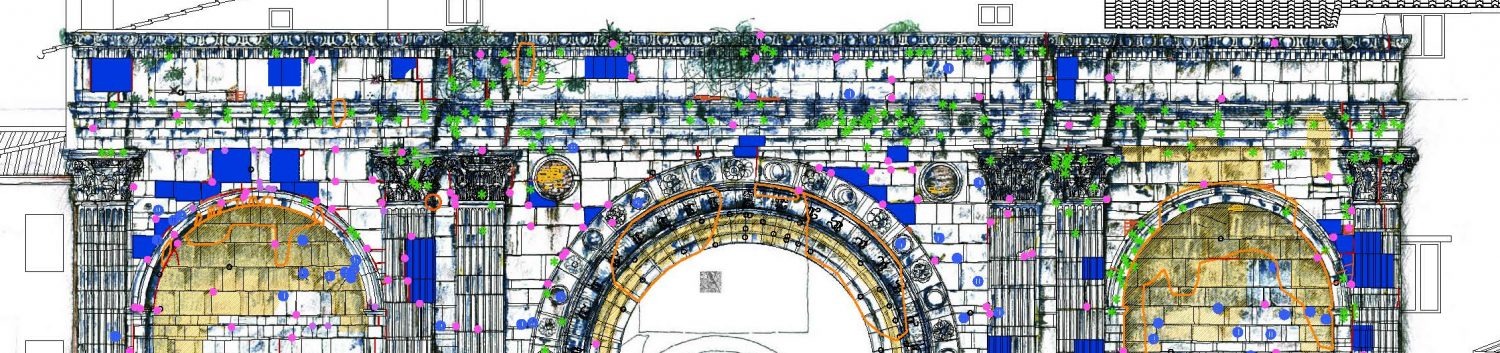
2017 - L'arco di Agostino di Duccio nel rione di Porta San Pietro a Perugia, ISBN
She is author of many others publications (more than 40) in books, reviews and proceedings.
She participated in some European Project, under Horizon 2020:
1. Horizon 2020 - Indutrial leadership, with CRdC Tecnologie Scarl, Centro Regionale di Competenza Tecnologie Regione Campania – Call EeB 8 – 2015: Integrated approach to retrofitting of residential buildings (delivered on February 4, 2015) – Scientific Coordinator prof. Rolando Scarano
2. Horizon 2020 Reflective Societies, with School in restoration of monuments la Sapienza Roma – Call Reflective 2: Cultural Heritage and European Identities Reflective 2, (deadline 28 maggio 2015).
Vedi tutti gli articoli di mariacarmelafratearchitetto